

US-listed exchange-traded funds continued to attract strong investor demand last week, even as rising Treasury yields put pressure on bond prices. The flow data suggest that at least some investors are treating higher yields as an opportunity to add fixed-income exposure rather than stepping away from bonds.
During the week ended August 28, investors added $27.2 billion to US-listed ETFs, taking year-to-date inflows to approximately $1.38 trillion. International equity ETFs led with $9.1 billion, followed by US fixed-income ETFs at $8.6 billion. US equity ETFs attracted $2.3 billion, while currency ETFs received $2.5 billion. International fixed-income ETFs also attracted $2.59 billion, bringing combined US and international fixed-income ETF inflows to approximately $11.22 billion for the week. The renewed appetite for fixed income is also relevant to GCC investors watching the sukuk market, where movements in US Treasury yields can influence the pricing of dollar-denominated sukuk and the yields available on new issuance.
US Fixed-Income ETFs Attract $8.6 Billion
US fixed-income ETFs accounted for about 31.6% of total weekly ETF inflows, making them the second-largest asset-class destination behind international equities.
The buying came against a softer bond-market backdrop. The S&P 500 gained roughly 1% during the week, while the US 10-year Treasury yield moved higher. On August 31, the yield reached an intraday high of around 4.77%, its highest level since January 2025.
Higher yields mean lower prices for existing bonds, but they also improve the income available to investors entering the market at current levels.
Short-Term Treasury ETFs Lead Weekly Flows
The individual ETF flows provide an important clue about how investors are positioning within fixed income.
The Vanguard Short-Term Treasury ETF (VGSH) attracted approximately $3.67 billion during the week. The Schwab Short-Term US Treasury ETF (SCHO) added another $1.75 billion, while the SPDR Portfolio Short Term Treasury ETF (SPTS) attracted $1.13 billion.
By contrast, several intermediate- and longer-duration Treasury ETFs recorded significant outflows, while the broad-market GOVT ETF also saw redemptions.
ETF flows indicate where capital was allocated, but they do not by themselves establish the reasons behind individual investor decisions.
At the broader fund level, however, equities remained important. The Vanguard S&P 500 ETF (VOO) led all ETFs with approximately $11.39 billion of weekly inflows, taking its year-to-date inflows to about $106 billion. The VanEck Semiconductor ETF (SMH) also attracted approximately $1.64 billion, showing continued appetite for the AI and semiconductor theme.
US Treasury Yields and the GCC Sukuk Market
The same rate dynamics are relevant to GCC fixed-income markets, particularly for dollar-denominated securities that use US Treasuries as a pricing reference.
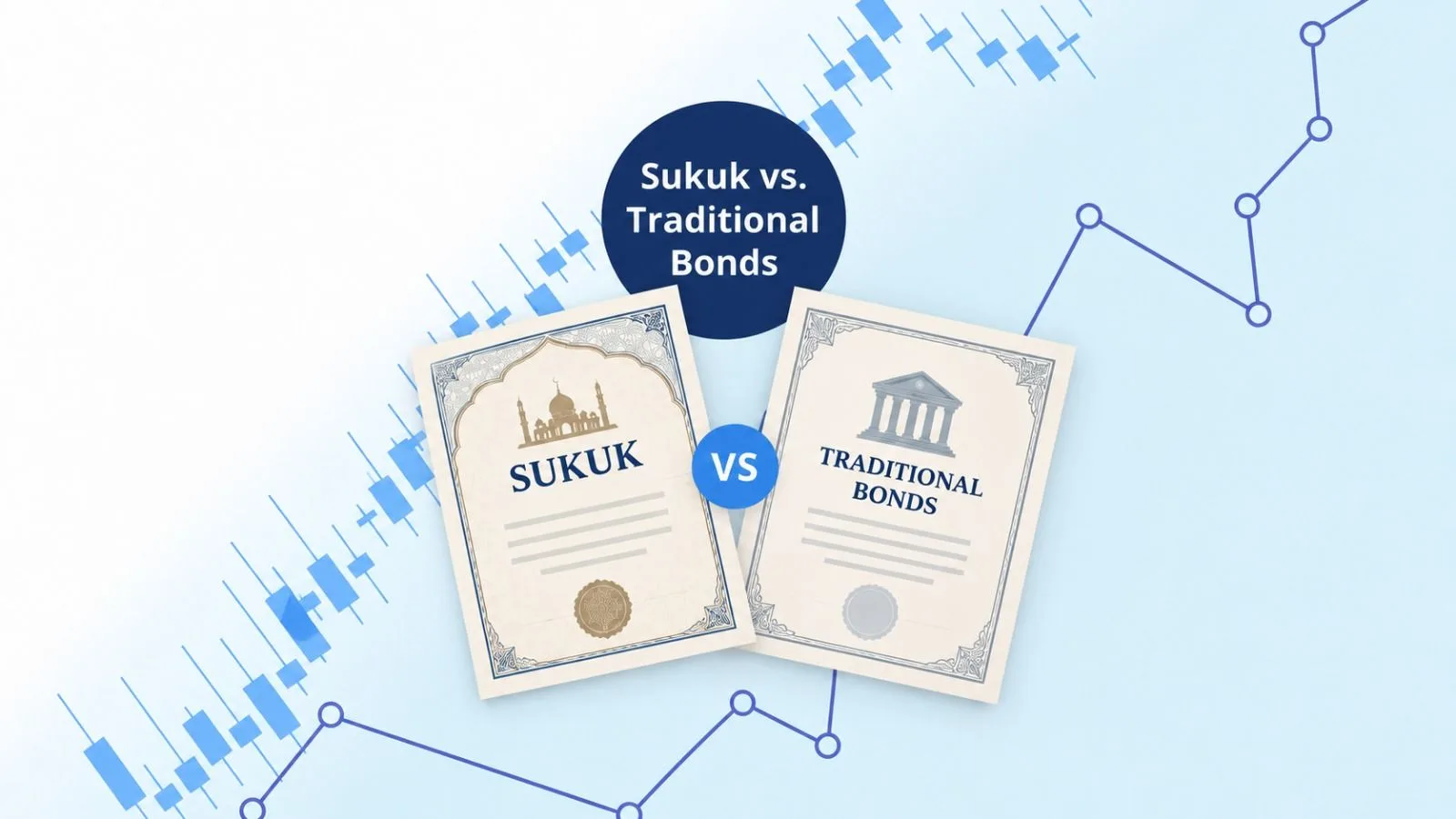
For dollar-denominated sukuk, higher US Treasury yields can lift the all-in yield available on new issuance when credit spreads remain broadly stable. This makes the Treasury market an important benchmark for investors evaluating the relative attractiveness of dollar sukuk.
The GCC market is already experiencing substantial issuance activity. GCC bond and sukuk issuance reached $102.69 billion across 161 transactions in H1 2026, up 6.5% from H1 2025. Saudi Arabia accounted for $49.34 billion and the UAE for $25.45 billion.
Sukuk issuance totaled $29.06 billion during the first half of 2026, down 29.5% from H1 2025, while conventional issuance rose 33.3% to $73.63 billion. US-dollar-denominated securities dominated the broader GCC primary market, accounting for $83.42 billion, or 81.2% of total issuance value.
UAE Treasury Sukuk Draws Strong Investor Demand
The UAE's domestic market provides a recent example of sukuk pricing and investor participation.
In July, the UAE Ministry of Finance issued AED 1.1 billion of dirham-denominated Treasury Sukuk and Treasury Bonds. The issuance included a T-Sukuk maturing in October 2027, which carried a 4.49% yield to maturity. Total bids reached AED 4.83 billion, equivalent to 4.4 times the amount offered. The T-Sukuk offered a 24-basis-point premium over a comparable US Treasury at the time of issuance.
The comparison is particularly useful because the sukuk yield and Treasury benchmark were assessed at the time of issuance, avoiding a comparison between yields from different market dates.
Higher Yields Are Not a Risk-Free Opportunity
The recent ETF flows highlight the trade-off between higher income potential and interest-rate risk. Short-duration Treasury ETFs are generally less sensitive to changes in interest rates than longer-duration bonds, while longer-maturity securities can experience larger price movements when yields change.
The same considerations apply to sukuk. Investors evaluating fixed-income securities typically need to consider maturity, duration, credit quality, currency exposure, and the spread over the relevant benchmark, rather than focusing on headline yield alone.
For GCC investors, movements in US Treasury yields can influence the pricing of dollar-denominated sukuk, particularly when those securities are priced relative to US Treasury benchmarks. However, the effect on individual sukuk will also depend on factors such as credit spreads, issuer fundamentals, liquidity, and the security's maturity and structure.
As a result, higher benchmark yields can affect both the income available on new issuance and the market value of existing fixed-income securities. The overall impact depends on the interaction between interest rates, credit spreads, and the characteristics of each security.
What Investors Should Watch
Three factors are likely to remain important for both ETF and sukuk investors:
- US Treasury yields: Further increases could improve yields on new fixed-income investments while pressuring existing bond prices.
- Interest-rate expectations: Changes in expectations for US monetary policy can quickly affect global fixed-income valuations.
- GCC credit spreads: Stable spreads can help higher Treasury benchmarks translate into more attractive yields for dollar-denominated sukuk.
The latest ETF flows show continued demand for fixed income even as bond prices come under pressure, with particularly strong flows into shorter-duration Treasury ETFs.
For GCC fixed-income markets, the key consideration is how changes in Treasury yields interact with credit spreads, duration, and currency exposure across individual sukuk and bond issues.