
Oman’s economy grew 2.6% year on year in the first quarter of 2026, with real gross domestic product reaching OMR9.69 billion, or about $25.2 billion, at constant prices. For Gulf Cooperation Council investors, the number gives the Muscat Stock Exchange a domestic macro anchor after a rapid rally and recent profit-taking, rather than turning Oman into a simple geopolitical hedge.
Petroleum activity rose 4.6% in Q1, supported by a 4.3% increase in crude oil activity and 6% growth in natural gas. Non-petroleum activity grew 2.4%, while services expanded 3.7%. The best service-sector readings came from financial and insurance activity, up 9.6%, telecommunications, up 8.3%, transportation and storage, up 3.1%, and wholesale and retail trade, up 1.6%.
MSX Rally Is About Re-Rating
MSX has outperformed this year, but that performance reflects domestic liquidity, earnings expectations, valuation catch-up and market-development reform more than a clean inverse correlation with wider Gulf risk.
MSCI inclusion expectations have been a major part of that re-rating. Oman remains in MSCI’s Frontier Markets universe, with the MSCI Oman Index comprising 10 constituents and U Capital estimating Oman’s weight in the MSCI Frontier Markets Index at 5.79% as of 30 April 2026. The larger investor focus is whether Oman can move over time toward Emerging Market eligibility. That story is being helped by market-access reforms, including Oman’s planned shift to T+2 settlement from 1 September 2026, which MSCI referenced in its 2026 Global Market Accessibility Review. Still, MSCI has not placed Oman under formal Emerging Market review, so the rally should be read as anticipation of a multi-year upgrade path rather than a confirmed index event.
Reuters reported on 19 May that Oman’s benchmark index fell 3.4% as investors booked profits after a strong rally, while still remaining up 27.6% year to date, the best performance among Gulf benchmarks at the time. By 9 July, Trading Economics put the MSM 30 at 7,644.45, down 0.08% over one month but up 66.09% over one year, which points to consolidation after a major advance rather than a fresh macro break.
U Capital had forecast in February that the MSX30 could reach 7,447 by the end of 2026, supported by domestic liquidity, earnings growth, attractive valuations and lower interest rates. The index has already moved beyond that level, so the next phase needs stronger confirmation from earnings, trading depth and foreign participation rather than valuation alone.
Why Oman Still Matters in the GCC Market Picture
Oman’s macro story remains useful for regional allocators because the growth mix is becoming broader. Agriculture and fishing grew 6.1% in Q1, while industry contracted 1.2%, mainly because manufacturing fell 3.1% and construction declined 1.9%. That split shows why investors should look beyond the GDP headline and into listed-sector earnings, especially banks, telecoms, logistics-linked services and consumer-facing companies.
The International Monetary Fund expects Oman’s real GDP growth to reach about 3.7% in 2026, driven by higher oil production, before easing to 3% in 2027. It also expects non-hydrocarbon growth to slow to 2.5% in 2026 as regional conflict affects tourism and construction, then recover to 3.2% in 2027. The IMF said Oman’s banking sector remains well capitalized and liquid, a relevant point for MSX because financials are central to the market’s earnings profile.
The ETF Angle: Oman Exposure Is Still Limited
For exchange-traded fund investors, Oman remains more of a watchlist market than a large passive allocation. The Xtrackers MSCI GCC Select Swap UCITS ETF 1C includes Oman in its eligible GCC universe, alongside Bahrain, Kuwait, Qatar, Saudi Arabia and the UAE. Yet its top constituents are dominated by Saudi, Kuwaiti, Qatari and UAE names, so investors need to check the latest country and holdings data before assuming meaningful Oman exposure. The fund had $26.56 million in assets, a 0.65% annual fee and indirect swap-based replication as of 30 June 2026.
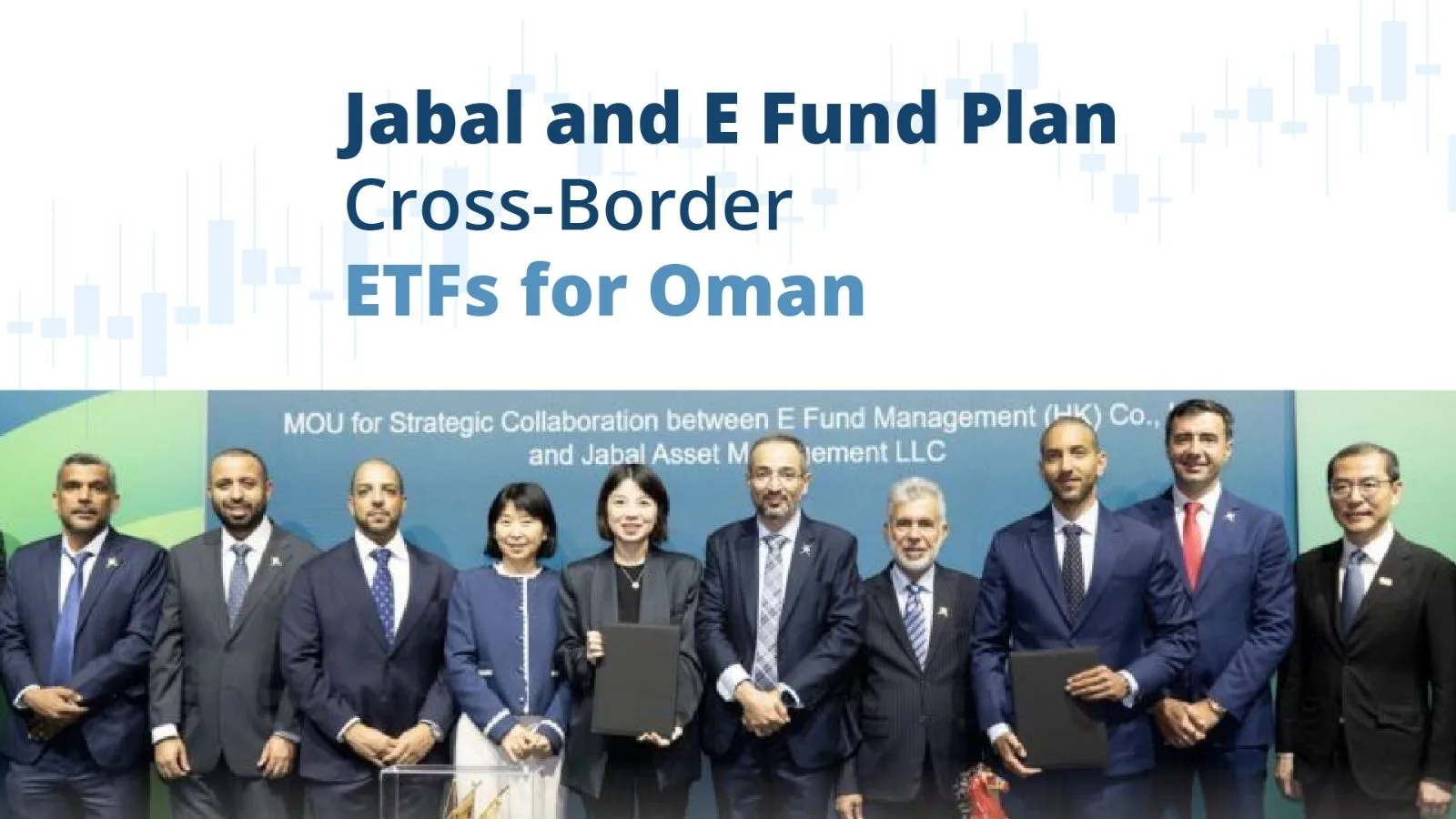
Local access is developing through listed fund structures. Oman Gateway Fund was listed on MSX in March 2026 as the Sultanate’s first listed open-ended mutual fund, after attracting subscriptions above OMR26.5 million. It is not a plain-vanilla passive ETF, but it gives investors a traded route into professionally managed MSX-listed equity exposure.
For regional investors, the practical takeaway is that Oman’s GDP growth supports continued attention on MSX, but product selection matters. Fund size, bid-offer spreads, index methodology, swap exposure, custody route and Sharia screening can matter as much as the macro number, especially while Oman remains a smaller line item in broad regional ETF allocations.