
A New Approach to End-of-Service Savings
For decades, gratuity in the UAE has worked the same way: an employer accrues a liability, then pays it out as a single lump sum when an employee leaves. It is a system with real weaknesses: it strains employer cash flow, offers employees no growth on their savings, and can lose real value to inflation over a long career.
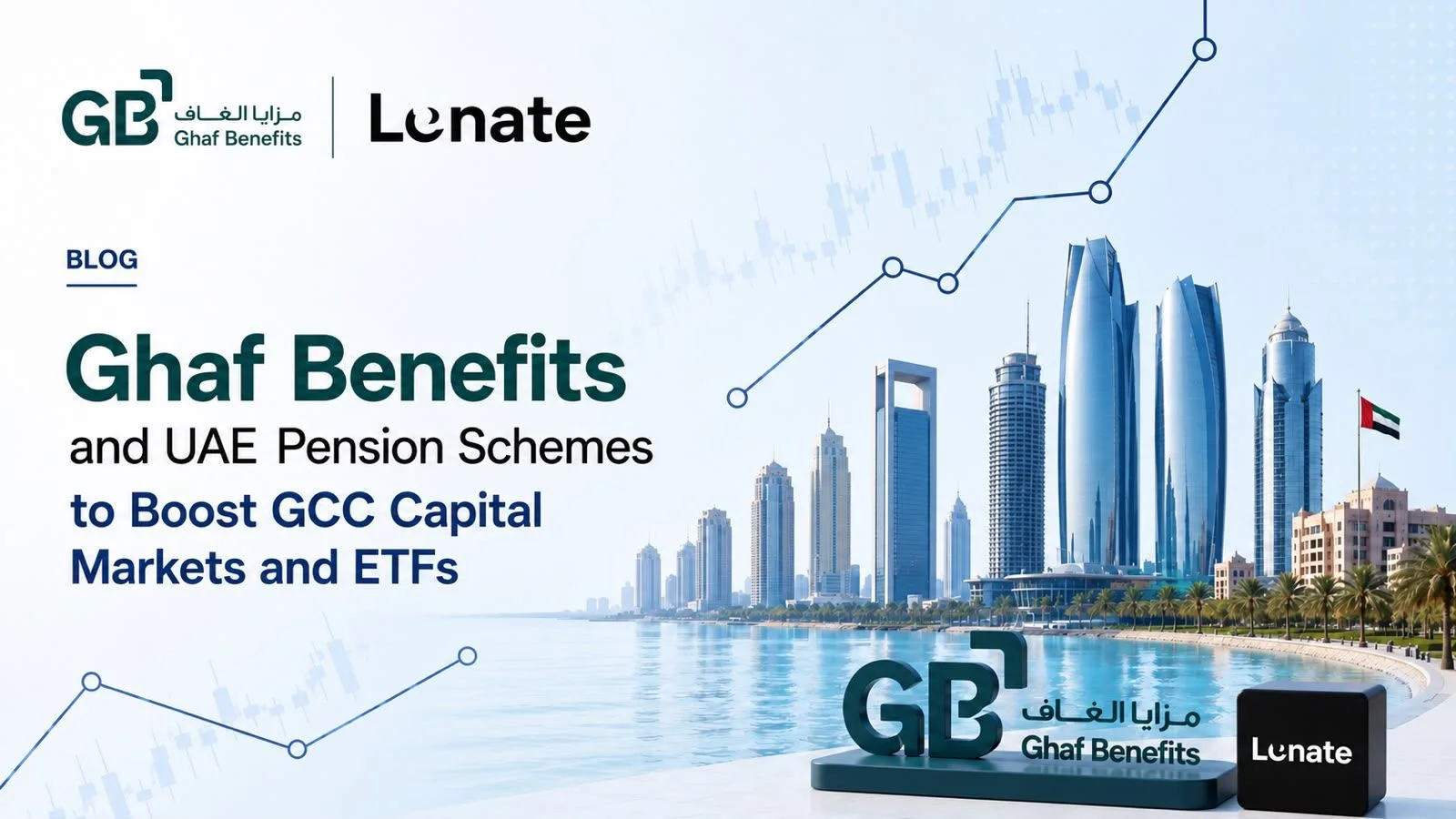
Ghaf Benefits, launched by Abu Dhabi-based Lunate, is one of the first operational implementations of the UAE's Alternative End-of-Service Benefits Scheme (the "Savings Scheme"), introduced under Cabinet Resolution No. 96 of 2023 and regulated jointly by the Ministry of Human Resources and Emiratisation (MoHRE) and the Securities and Commodities Authority (SCA). Under the scheme, instead of a lump-sum payout, employers make monthly contributions into regulated investment funds managed by Lunate. The scheme offers six investment options spanning capital protection, conservative and balanced strategies, each available in both conventional and Shariah-compliant formats.
Lunate's Role in Ghaf Benefits
Ghaf Benefits was launched by Lunate in February 2025 as the firm's dedicated End-of-Service Benefits platform, complementing Lunate's private markets, wealth management, and ETF businesses. Lunate is one of the region's largest alternative investment managers, with more than USD 115 billion in assets under management, and has built one of the GCC's broadest ETF platforms spanning equity, fixed income, and thematic strategies listed on the Abu Dhabi Securities Exchange. This provides Ghaf Benefits with access to an institutional investment platform operating across public and private markets.
In May 2025, Lunate appointed Mohammed Ali Yasin as Chief Executive Officer of Ghaf Benefits. Yasin has more than 27 years of experience in the UAE's financial services industry, having previously served as CEO of SHUAA Securities and FAB Securities, as well as Chief Strategy Officer at Al Dhabi Capital. Announcing the appointment, Seif Fikry, Managing Partner at Lunate, said Yasin's "deep expertise and longstanding leadership in the region's capital markets will be instrumental in advancing our mission to deliver innovative investment solutions."
In recent LinkedIn videos and interviews, Yasin has described Ghaf Benefits as a way to transform a traditional one-time gratuity payment into a professionally managed long-term savings vehicle, encouraging employers to adopt the scheme early so employees can "maximize the benefits of time and long-term growth." The investment options span capital protection, conservative, and balanced strategies across both conventional and Shariah-compliant portfolios. While the underlying portfolios are diversified and may include deposits, sukuk, and other investment instruments depending on the strategy, Lunate's established ETF platform provides the infrastructure and expertise to incorporate ETFs where appropriate within these professionally managed portfolios. This creates a natural link between the growth of workplace savings and the long-term development of the GCC's ETF ecosystem.
Traditional Gratuity vs. Ghaf Benefits
Under UAE labour law, gratuity is calculated at 21 days' basic wage per year for the first five years and 30 days per year thereafter, capped at two years' basic salary, a formula that has not changed materially since Federal Decree-Law No. 33 of 2021. The UAE's private sector is overwhelmingly expatriate, and gratuity applies almost exclusively to that expatriate workforce, since UAE nationals are instead covered by mandatory national pension plans rather than end-of-service gratuity. That makes gratuity one of the largest and least discussed unfunded liabilities sitting on Gulf corporate balance sheets.
Retirement Savings as Long-Term Investment Capital
One of the key reasons the U.S. and European ETF markets have grown so rapidly is the strong participation of retirement and pension plans. Defined contribution plans such as 401(k)s in the U.S. and workplace pension schemes across Europe consistently allocate long-term savings to low-cost index funds and ETFs, providing a stable source of capital for local equity and bond markets. These regular contributions support market liquidity, encourage long-term investing, and have played a significant role in the development of deep and resilient capital markets.
As retirement assets accumulate over time, institutional portfolio managers typically favour diversified, low-cost investment vehicles to achieve broad market exposure. This has been a defining feature of pension systems in the United States, Europe, and Australia, and provides an important framework for understanding the long-term potential of the UAE’s Savings Scheme.
This is where the Ghaf Benefits story intersects with a much bigger regional theme: the GCC's capital markets and exchange-traded funds. While it is still small relative to the size of the economies it serves, a growing pool of regulated retirement-style savings is exactly what the regional capital market needs to foster long-term demand for the region's fund industry.
Ghaf Benefits' six funds currently sit inside regulated investment fund structures rather than publicly disclosed ETF portfolios. But similar retirement and workplace savings systems elsewhere in the world, from 401(k) plans in the US to superannuation in Australia, have historically become significant, structural users of index funds and ETFs as their assets have grown. The mechanism that made that possible was simple: recurring, monthly, non-discretionary contributions from a large and growing workforce.
Given the UAE's large expatriate private-sector workforce, even gradual, voluntary adoption of schemes like Ghaf Benefits could create a sizeable pool of recurring investment contributions over time, the kind of durable, non-discretionary capital that has been largely absent from a GCC ETF market that is still growing from a small base and remains heavily concentrated in a handful of products.
Bottom line
Ghaf Benefits represents an important step in modernising the UAE's end-of-service savings system while supporting the GCC's evolving investment ecosystem. By replacing large lump-sum gratuity payments with recurring workplace contributions, the scheme has the potential to create a stable source of long-term investment capital. Over time, broader adoption could increase the pool of long-term institutional capital available to regional investment managers, supporting ETF adoption, improving market liquidity, and encouraging continued product innovation across the GCC. While its ultimate impact will depend on employer adoption and investment allocation decisions, the Savings Scheme introduces a framework that has helped deepen capital markets in many developed economies. If adoption continues to expand, Ghaf Benefits and similar workplace savings schemes could become an important source of long-term institutional capital, supporting the continued evolution of the GCC's ETF and asset management industry.