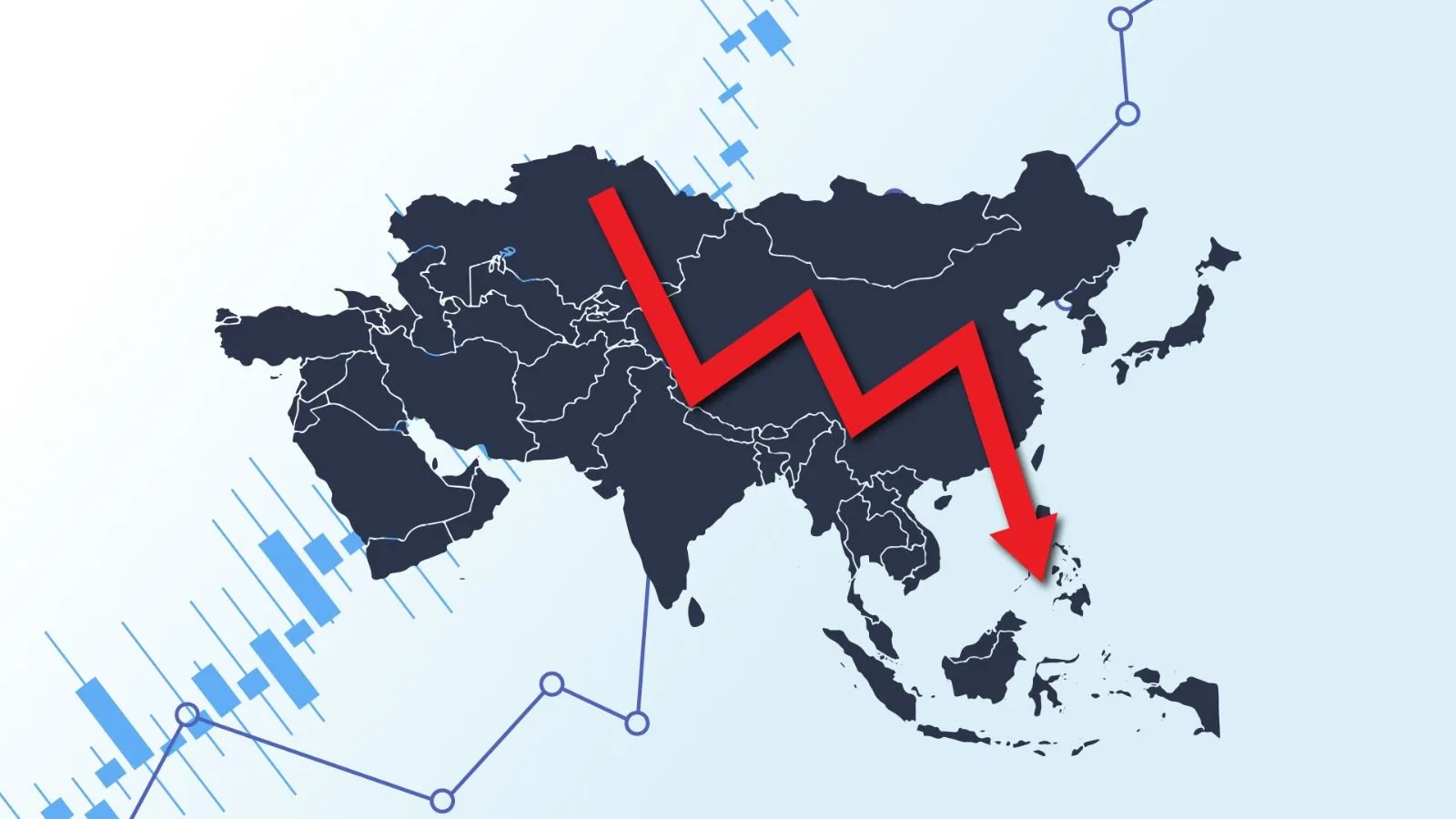
Asian semiconductor stocks suffered heavy losses on November 5, 2026, as investors reassessed the outlook for artificial intelligence investment following the Democrats' sweep of both chambers of the US Congress.
An estimated US$550 billion in market value was erased across South Korean, Taiwanese and Japanese equities, according to market commentary circulating Thursday, although the aggregate figure has not been independently verified.
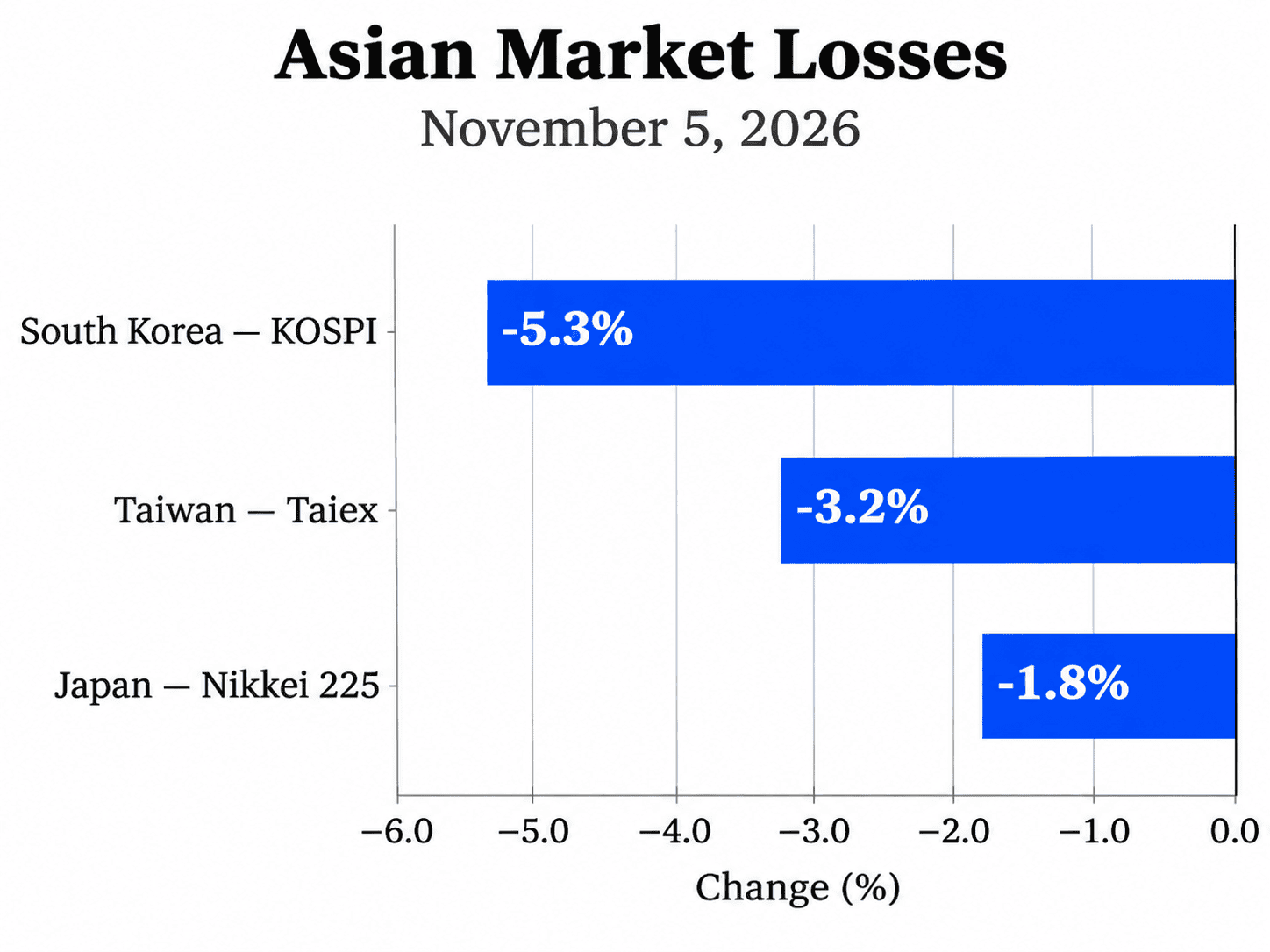
South Korea's KOSPI fell approximately 5.3%, Taiwan's Taiex declined 3.2%, and Japan's Nikkei 225 lost 1.8%, with semiconductor manufacturers and AI infrastructure suppliers bearing the brunt of the selling.
Semiconductor Giants Lead the Sell-Off
The sharpest declines occurred among companies supplying memory chips, processors and equipment used in AI data centers.
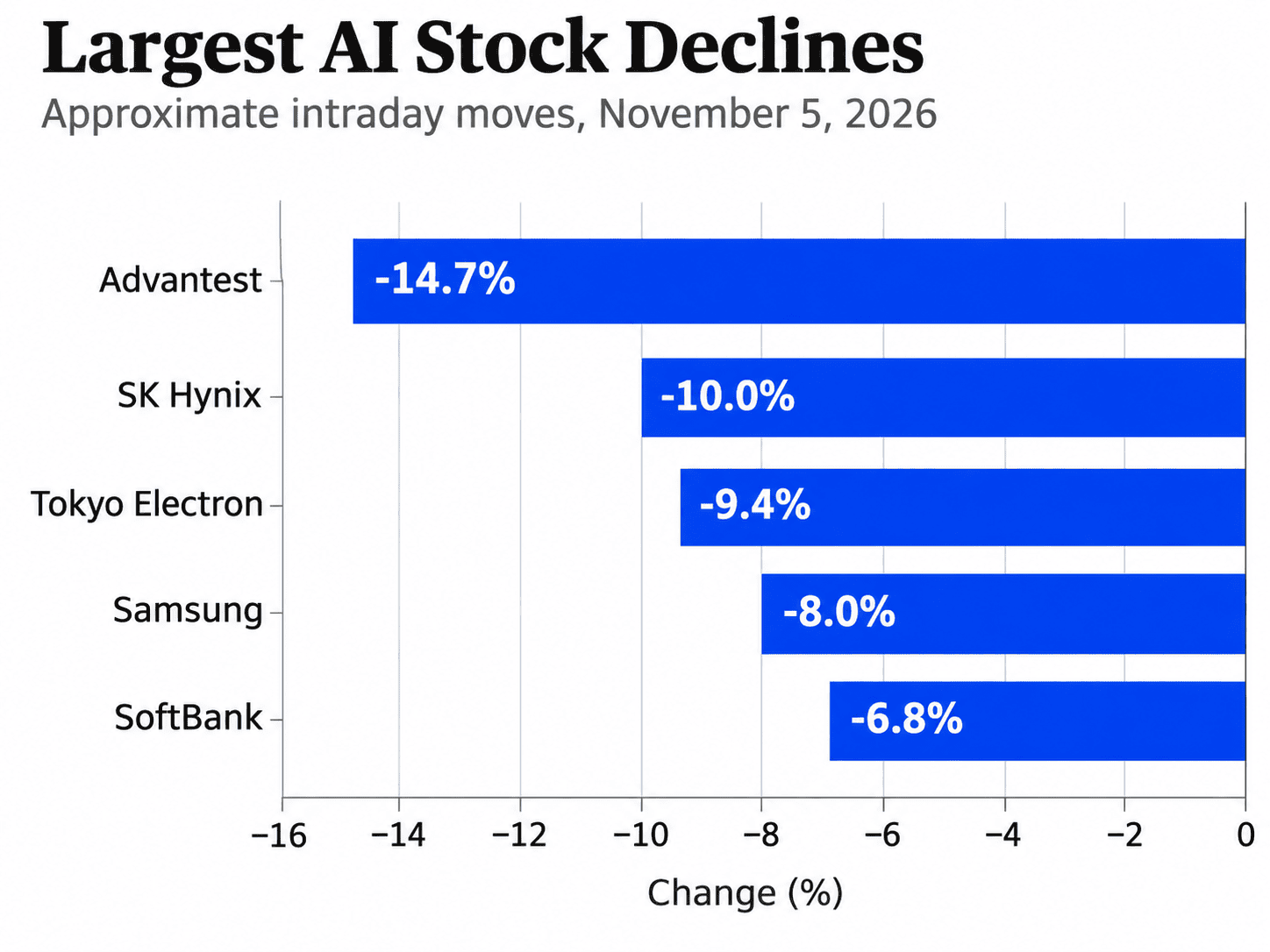
South Korea's SK Hynix fell more than 10% intraday before recovering some losses, while Samsung Electronics dropped more than 8% at one point.
Japanese semiconductor-equipment manufacturer Advantest plunged nearly 15%, while Tokyo Electron lost around 9%.
The selling also affected Kioxia, SoftBank Group and Taiwan's MediaTek, reflecting concerns that slower AI infrastructure expansion could weaken future demand for computing hardware.
Why Did the US Election Hit Asian Chipmakers?
The catalyst was the Democratic Party's victory in the November 3 midterm elections, which raised expectations of greater oversight of AI infrastructure development.
Concerns centre on electricity consumption, rising utility costs and the environmental impact of large-scale data centres.
Democratic victories in states with substantial planned data-centre investment, particularly Texas and Georgia, increased speculation that future construction projects could face additional regulatory scrutiny.
However, no nationwide restriction on AI data-centre construction has been announced.
The market reaction reflects expectations of potential policy changes rather than confirmed reductions in technology spending.
Why Asia Is More Exposed Than Wall Street
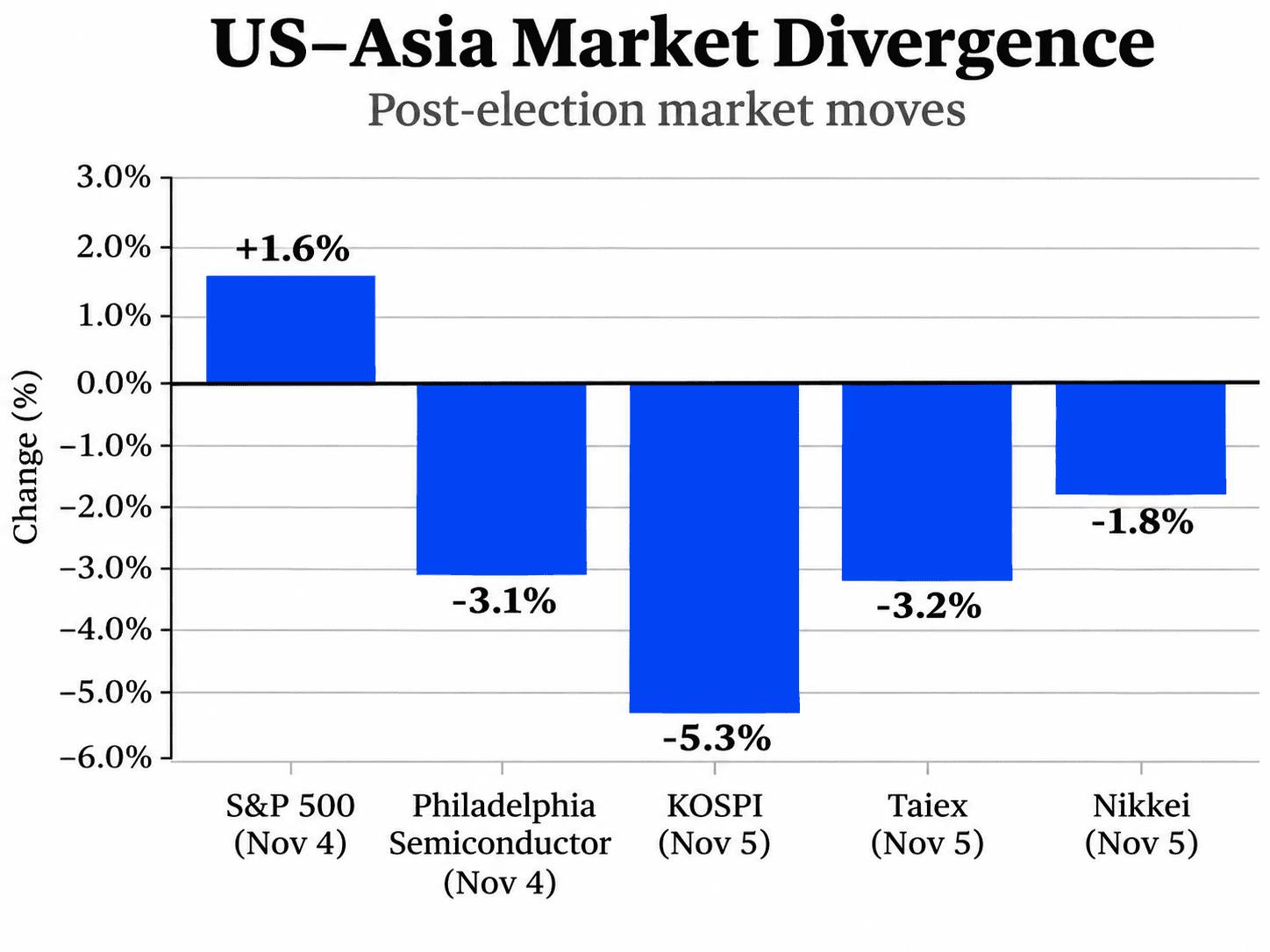
The divergence between US and Asian markets is particularly revealing.
The S&P 500 gained approximately 1.6% on November 4, even as the Philadelphia Semiconductor Index declined 3.1%.
South Korean and Taiwanese companies occupy critical positions in the AI supply chain, supplying high-bandwidth memory, advanced chips and manufacturing equipment.
If US technology companies slow data-centre construction, Asian suppliers could experience weaker order growth even if major American technology platforms remain profitable.
This helps explain why Asian chipmakers fell more sharply than broader US equity indices.
What Does This Mean for Semiconductor ETFs?
The sell-off has implications for investors holding concentrated semiconductor and memory-focused funds.
The Roundhill Memory ETF (DRAM) provides targeted exposure to memory-chip manufacturers, while the VanEck Semiconductor ETF (SMH) and iShares Semiconductor ETF (SOXX) provide broader exposure to the semiconductor industry.
Investors can compare semiconductor ETFs, holdings and expense ratios to assess differences in concentration and exposure.
For GCC investors, the decline is also relevant to recently introduced Korean equity investment products, including the PLUS Korea Manufacturing Core Alliance ETF (KMCA), whose underlying strategy includes South Korean industrial and technology exposure.
The critical question is whether the sell-off reflects a temporary adjustment to political uncertainty or the beginning of a broader reassessment of AI capital expenditure.
For now, the market is repricing expectations rather than reacting to confirmed reductions in semiconductor demand.