



Bitcoin has fallen below $60,000 as persistent selling pressure and record withdrawals from exchange-traded funds (ETFs) deepen one of the cryptocurrency's sharpest corrections in years. The world's largest digital asset traded around $59,200 on November 25, 2026, down approximately 23% since the beginning of November and heading toward its worst monthly performance since June 2022.
The decline marks a sharp reversal in investor sentiment, particularly among institutional investors who helped fuel Bitcoin's earlier rally through US-listed spot ETFs.
Record Bitcoin ETF Outflows Accelerate the Selloff
According to Bloomberg data, US spot Bitcoin ETFs recorded approximately $4.71 billion in net outflows through November 23, already exceeding the previous monthly withdrawal record. BlackRock's iShares Bitcoin Trust ETF (IBIT) accounted for approximately $4 billion of those redemptions, reflecting the scale of selling across the largest institutional Bitcoin investment vehicle. On November 23 alone, US spot Bitcoin ETFs experienced roughly $570 million in withdrawals, including approximately $509 million from IBIT.
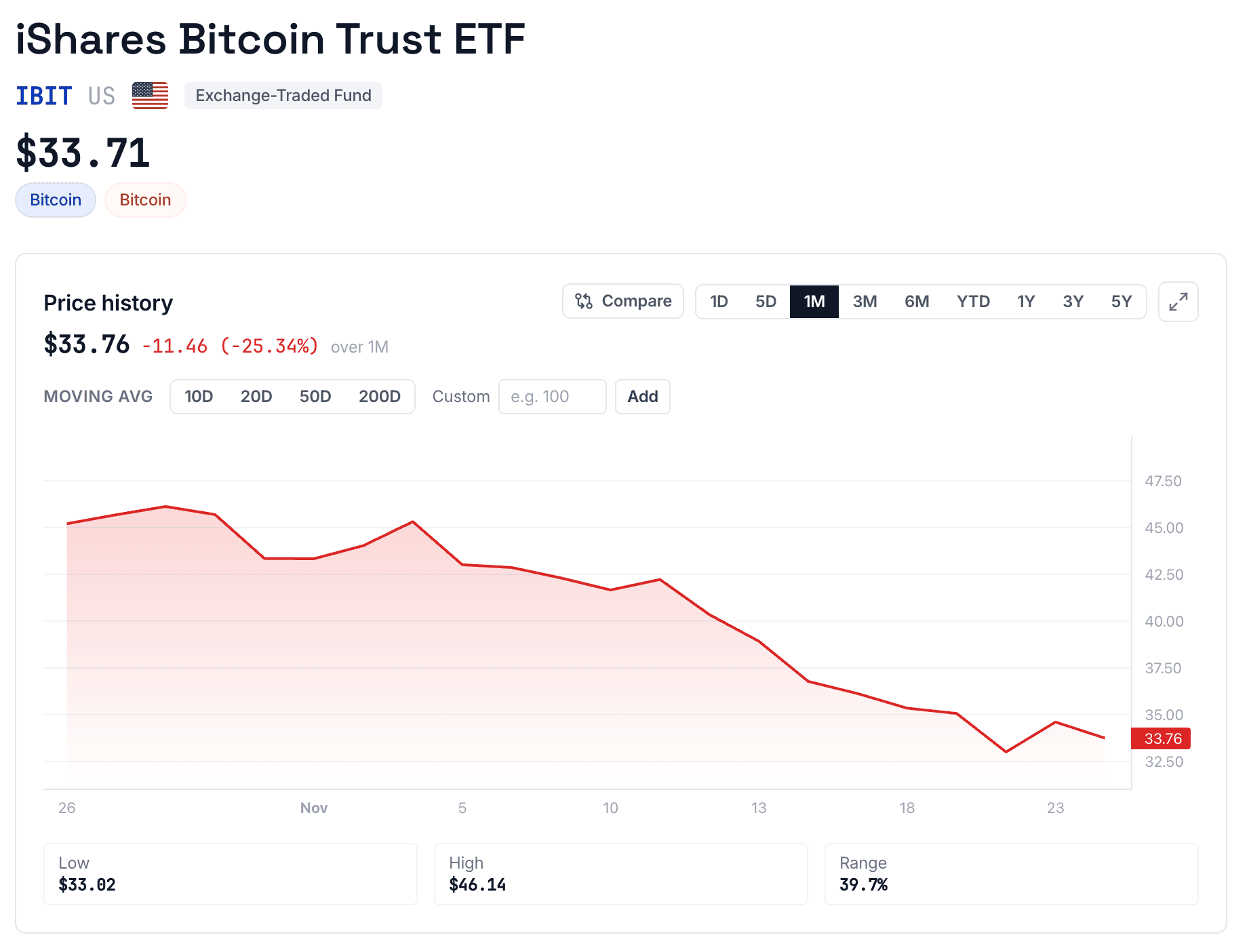
The outflows matter because spot Bitcoin ETFs hold the underlying cryptocurrency. Sustained redemptions can translate into selling pressure as fund holdings are adjusted to meet investor withdrawals.
Why Is Bitcoin Falling?
Expectations of higher US interest rates have reduced enthusiasm for speculative assets, while a stronger dollar has made non-yielding investments less attractive. Technology-sector volatility has also affected cryptocurrency markets, with investors reducing exposure to assets sensitive to global liquidity conditions. Meanwhile, recent cryptocurrency security incidents have weighed on confidence. As Nukoud previously reported, Bitcoin fell below $77,000 in October following Binance's reported $6.3 billion security breach.
The latest downturn has been compounded by leveraged liquidations. Bitcoin briefly approached $55,500 last week, its lowest level in more than two years, before recovering some losses.
What Does This Mean for Bitcoin ETF Investors?
The correction has affected major Bitcoin ETFs, including Fidelity Wise Origin Bitcoin Fund (FBTC) and Grayscale Bitcoin Trust ETF (GBTC). Although these products offer regulated brokerage access and institutional custody arrangements, they remain exposed to Bitcoin's underlying price volatility. For GCC investors, the selloff provides another reminder that ETF structures simplify access but do not eliminate investment risk.
Investors can compare Bitcoin ETFs through Nukoud's Data Hub, including their fees, performance and fund characteristics.
What Could Signal a Bitcoin Recovery?
The next indicators to monitor are institutional ETF flows, US monetary policy expectations and Bitcoin's ability to recover above $60,000. According to Glassnode, a sustained return of ETF inflows and stronger US spot-market demand would provide evidence of renewed buying interest. Until then, Bitcoin's inability to sustain recent rebounds suggests that selling pressure remains firmly established.