Oil markets experienced one of their sharpest reversals of 2026 following the November 3 US midterm elections, as investors reassessed the future of the US-Israeli war with Iran and its impact on Middle Eastern energy supplies.
Brent crude plunged 8.7% on November 4 to US$94.62 per barrel, its lowest settlement since August 31, while West Texas Intermediate (WTI) fell 8.3% to US$88.12.
The decline followed the Democratic Party's victory in both chambers of Congress, raising expectations that President Donald Trump could face greater political pressure to negotiate an end to the conflict.
However, the sell-off proved short-lived. Brent rebounded 3.88% on November 5 to US 98.29, before climbing to US99.58during early trading on November 6 as renewed tanker attacks revived supply concerns.
Oil's Post-Election Volatility
Source: Reuters. November 6 prices are intraday. Daily changes refer to each benchmark's own previous settlement.
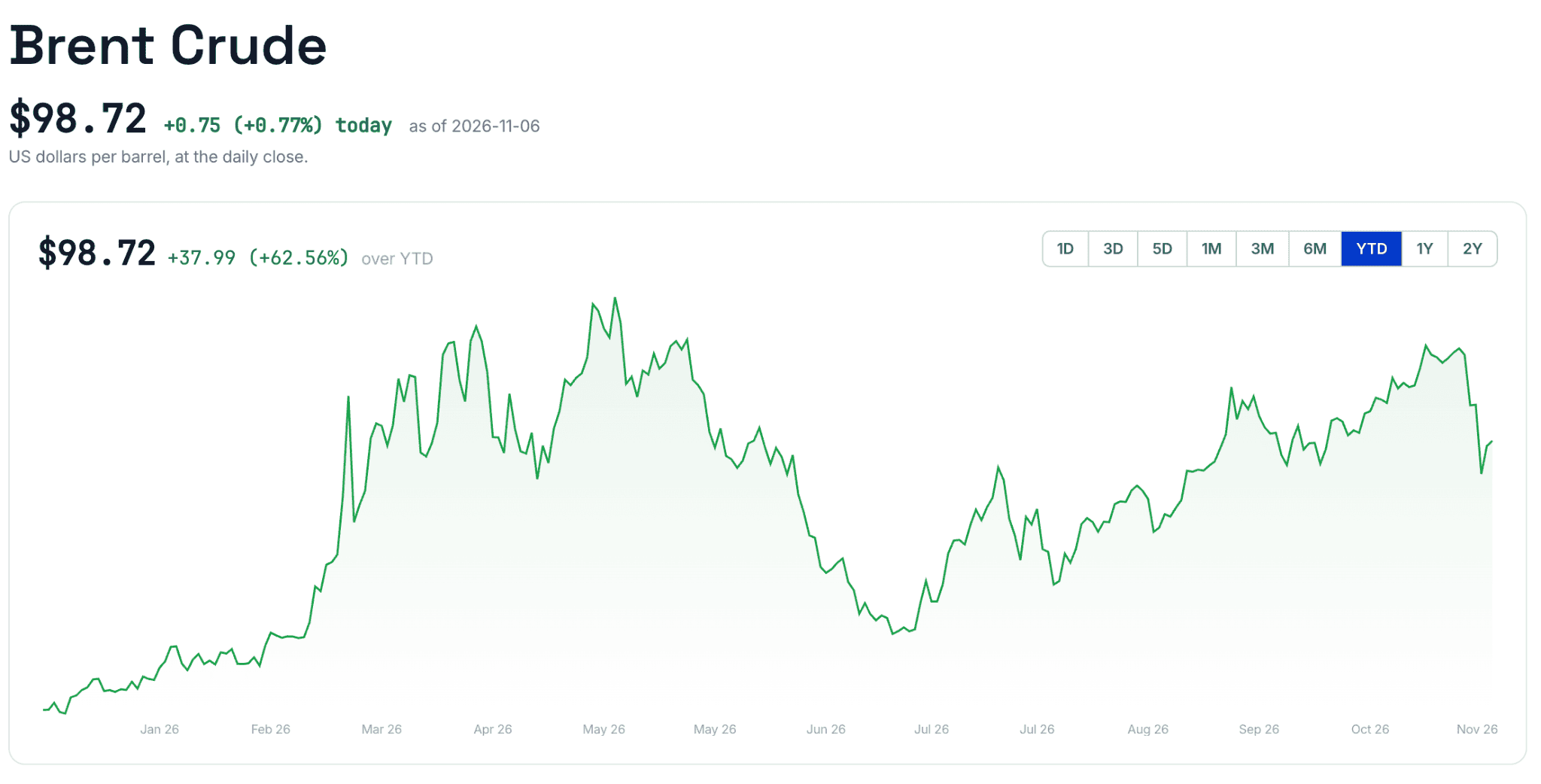
Despite the recovery, both benchmarks were still heading toward weekly losses of approximately 12% as of Friday morning.
Why Did Oil Fall So Sharply?
The election changed expectations about US foreign policy rather than the immediate availability of crude.
Investors interpreted the Republican defeat as a sign that high energy prices and the prolonged Iran conflict had become politically costly for the White House.
A potential negotiated settlement could eventually restore shipping capacity, reduce insurance costs and increase the amount of Middle Eastern oil reaching international markets.
However, a Democratic-controlled Congress does not automatically end the war. The administration retains substantial foreign-policy powers, while negotiations with Iran remain unresolved.
The initial price collapse therefore represented a rapid repricing of geopolitical expectations, not an immediate recovery in global oil supply.
Tanker Attacks Restore the Supply Risk Premium
By November 5, renewed attacks on commercial vessels had challenged expectations of a quick normalization.
The UK Maritime Trade Operations agency reported at least five vessel incidents since the beginning of the week, following 35 reported incidents during October.
The Strait of Hormuz remains central to the outlook because disruptions to shipping affect the ability of Gulf producers to deliver crude, regardless of their available production capacity.
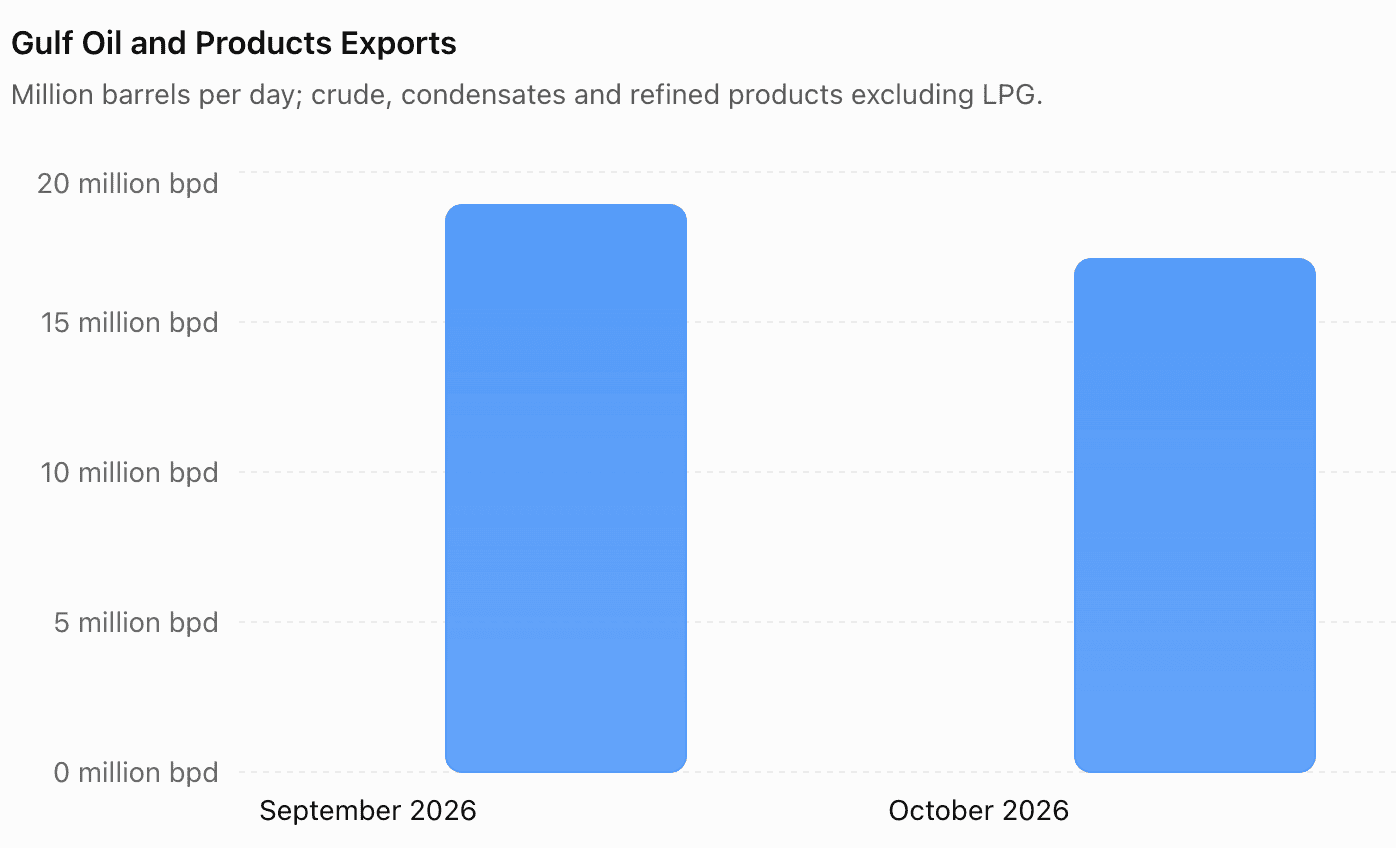
Gulf exports of crude, condensates and refined products averaged 17.1 million barrels per day in October, down from 18.9 million in September, according to Vortexa data cited by Reuters.
That October figure represented roughly three-quarters of pre-war export volumes.
The rebound in oil prices reflects the market's recognition that political expectations alone cannot guarantee safer shipping routes.
What Does This Mean for GCC Energy Markets?
For Saudi Arabia, the UAE and other Gulf exporters, the situation creates competing financial pressures.
Lower oil prices could reduce hydrocarbon revenues and place additional pressure on government budgets, while a sustained easing of regional tensions would improve shipping reliability and reduce logistical costs.
The UAE is reportedly considering another export pipeline that could help reduce dependence on Hormuz, illustrating the growing strategic importance of alternative export infrastructure.
Investors must therefore distinguish between oil-price gains driven by conflict and improvements in the underlying economics of energy exports.
A higher crude price can benefit producers, but disrupted shipping, elevated insurance costs and infrastructure damage can offset part of that advantage.
How Have Oil and Energy ETFs Performed Since the US Elections?
The post-election oil sell-off has also affected energy ETFs, although the impact has varied considerably between crude futures, energy equities and petrochemical producers.
The United States Oil Fund (USO), which provides exposure to WTI crude futures, fell 8.07% on November 4 before recovering 1.89% on November 5. Despite the reversal, the fund remained up approximately 110% year to date as of November 4, reflecting the extraordinary increase in oil prices during 2026.
Meanwhile, the Energy Select Sector SPDR ETF (XLE), which holds major US energy companies, declined 4.74% on November 4 and a further 2.98% the following session. Nevertheless, its year-to-date total return remained approximately 40.6% through November 5.
For Saudi investors, the YAQEEN Petrochemical ETF (9401) offers a different type of energy-related exposure, tracking Saudi-listed petrochemical companies rather than crude futures. Its performance depends not only on oil prices but also on feedstock costs, chemical-product prices, export demand and corporate profitability.
The divergence is particularly relevant following Saudi Aramco's third-quarter earnings announcement, which showed adjusted net income rising 9% to US$31.2 billion as higher crude prices supported profitability despite regional supply disruptions.
For GCC investors, the election highlights an important distinction: higher oil prices can support upstream producers' earnings while increasing costs for other parts of the energy value chain. Falling crude prices can produce the opposite effect.
The key question now is whether diplomatic developments translate into a sustained recovery in Gulf shipping volumes. Until then, crude futures and energy-sector ETFs could remain highly sensitive to developments in Washington, Tehran and the Strait of Hormuz.