Brent crude has climbed sharply in recent weeks as geopolitical tensions across the Middle East renew concerns over the security of global oil supplies.
According to Brent crude market data, the benchmark stood at US$107.06 per barrel on October 20, 2026, representing a 7.23% increase over the preceding month.
Brent futures also experienced significant volatility during Tuesday's trading session, briefly reaching US$111.99 per barrel, a five-month high, before settling at US$108.79, according to Reuters.
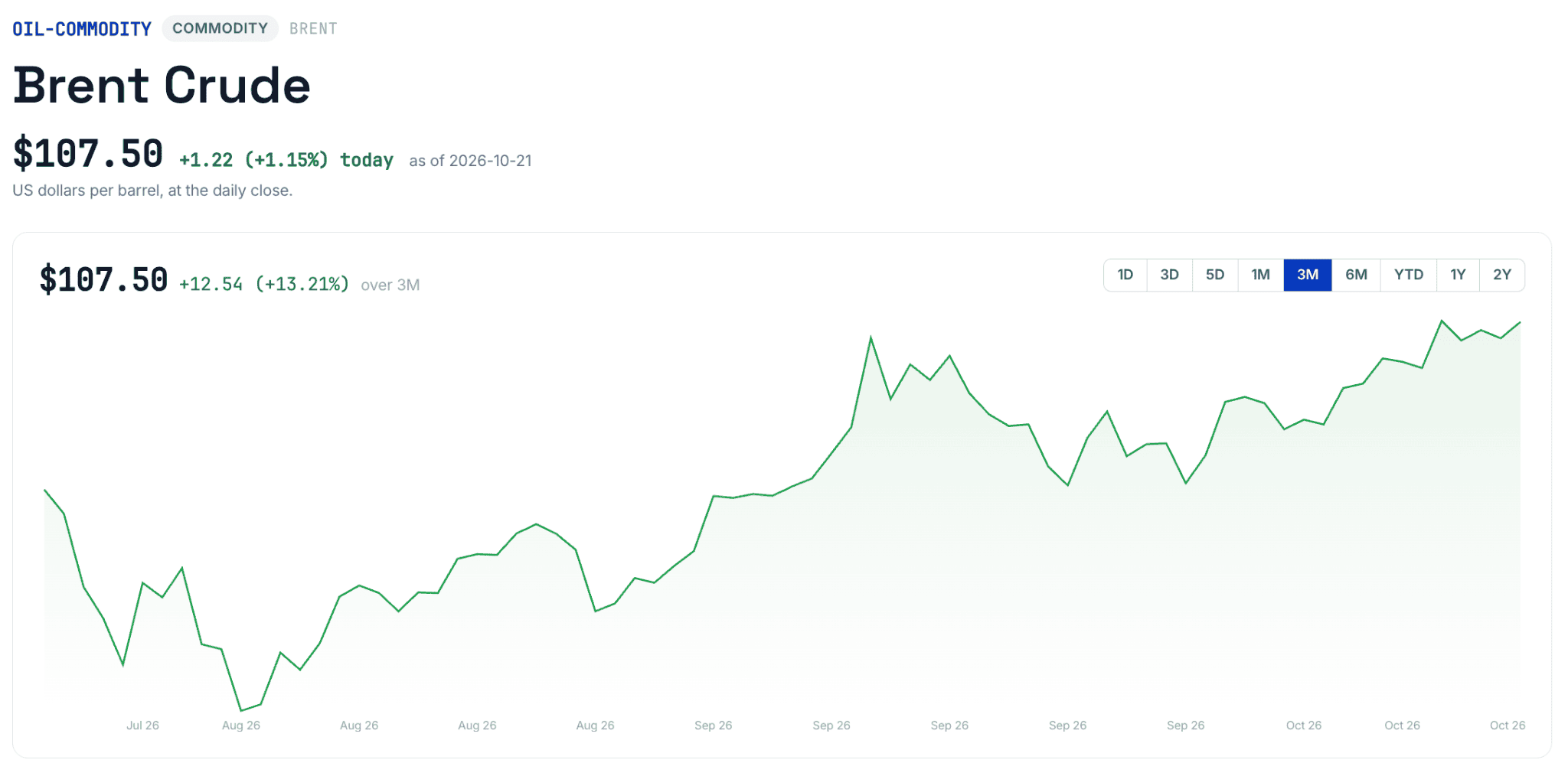
The price movements reflect an oil market increasingly sensitive to developments in the Gulf, where shipping security, regional tensions and diplomatic efforts continue to influence supply expectations.
Middle East Tensions Keep Oil Markets on Edge
The latest rally follows renewed threats to energy infrastructure and commercial shipping across the region.
According to shipping intelligence provider Kpler, at least 18 vessels were reportedly attacked over a two-week period, raising concerns about tanker movements through the Strait of Hormuz and surrounding waters.
Meanwhile, Yemen's Houthi movement claimed attacks against Saudi energy and transport facilities, including infrastructure associated with Saudi Aramco. Saudi authorities had not independently confirmed those claims as of October 20.
These developments have increased the geopolitical risk premium in crude prices, even as regional oil shipments continue.
Diplomatic developments have also contributed to volatility. Brent retreated from its October 20 high following reports of discussions between Iran's president and Pakistan's army chief over possible mediation efforts.
The reversal highlights how oil prices are responding not only to actual supply disruptions but also to shifting expectations about regional security.
What Higher Oil Prices Mean for GCC Markets
Higher crude prices carry important implications for GCC economies, particularly major exporters such as Saudi Arabia, the UAE, Kuwait and Oman.
Sustained increases in oil prices can support export revenues, government finances and energy-sector earnings. However, the benefits depend on production volumes, operating costs and each country's fiscal structure.
For investors, understanding the differences between Brent, WTI and other GCC oil benchmarks is also important.
How Are Oil ETFs Affected?
A rally in crude oil does not necessarily translate into equivalent gains across energy-related ETFs.
The United States Oil Fund (USO), for example, obtains exposure through WTI futures contracts rather than directly holding physical crude. Energy equity ETFs, meanwhile, invest in oil producers and service companies whose returns also depend on profitability, operating costs and stock-market valuations.
These differences become particularly important when Brent and WTI prices diverge, as funds tracking different oil benchmarks or energy businesses can deliver substantially different returns.
Investors considering leveraged oil ETPs targeting four times daily returns face additional risks from daily compounding, financing costs and futures-market movements.
Note: Oil-linked funds do not necessarily replicate movements in Brent crude. Returns depend on the underlying benchmark, investment structure, fees and holding period.
For GCC investors, the immediate focus remains on whether regional oil shipments can continue without major disruption and whether diplomatic efforts can ease tensions.
Brent's latest rally demonstrates how quickly geopolitical risks can reshape energy prices, but the sustainability of gains will ultimately depend on physical supply conditions and developments across the Gulf.