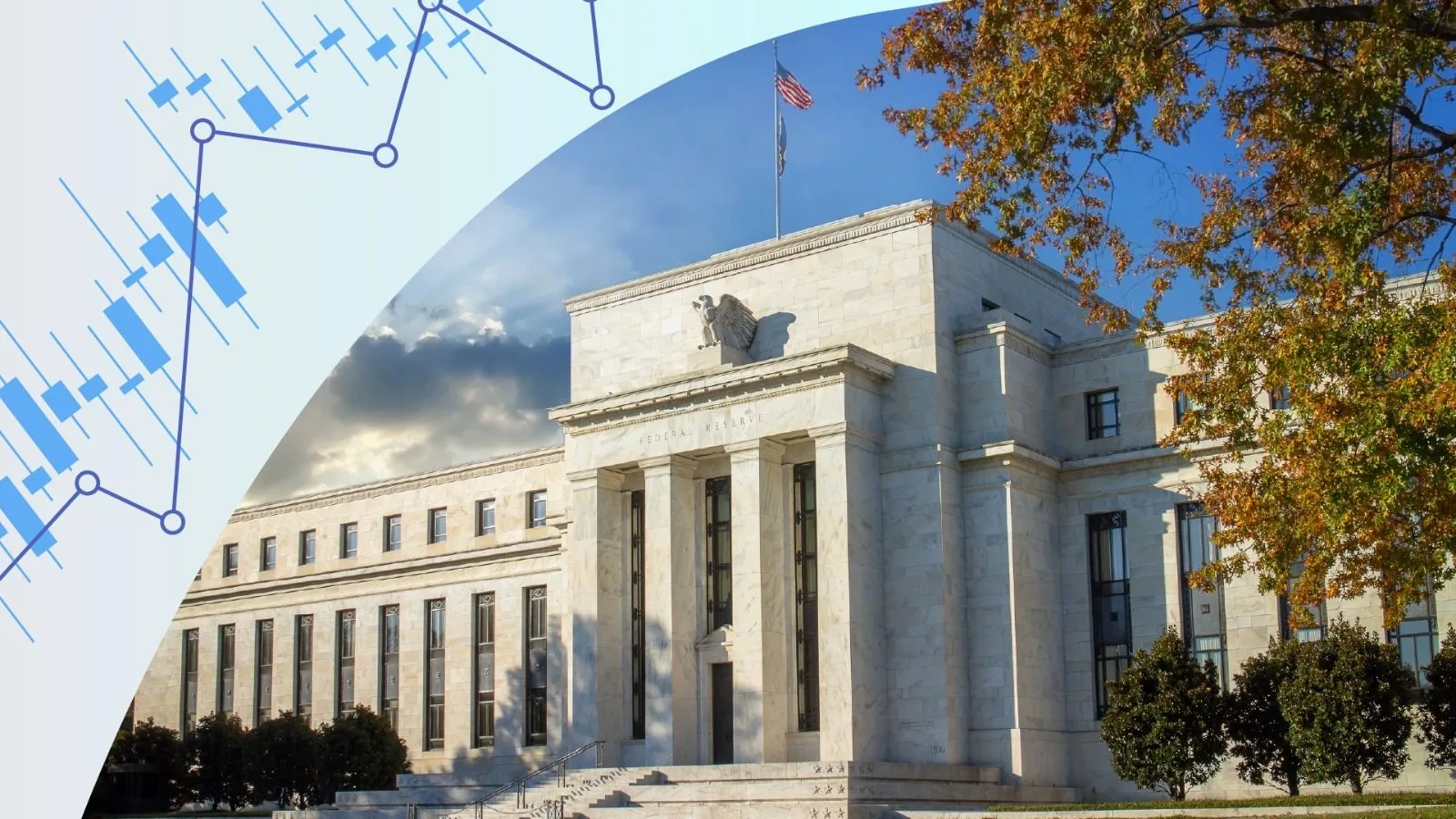
When the US Federal Reserve cut rates on 17 September 2025, central banks in Saudi Arabia, the UAE, Qatar, Bahrain, and Oman eased their own benchmark rates in the same cycle. A year later, they reversed course. On 16 September 2026, the Fed raised its target range by 25 basis points to 3.75%-4.00%, and Nukoud's report on the hike shows Gulf central banks following within hours.
Both moves show how Fed rate cuts and hikes affect GCC ETF performance: the Fed sets the tone for borrowing costs across the Gulf, and sukuk, bank-heavy, and growth funds each respond differently. For more on regional markets, see Nukoud's GCC coverage.
Why the Peg to the Dollar Ties GCC Markets to the Fed
Most Gulf currencies, including the UAE dirham and the Saudi riyal, are pegged to the US dollar, so local central banks typically mirror the Fed's policy moves to maintain monetary stability. Nukoud's coverage of the 2025 cut shows how that worked on the way down.
The Fed lowered its target to 4.00%-4.25%, its first cut since December 2024. Saudi Arabia then reduced its repo and reverse repo rates to 4.75% and 4.25%, the UAE lowered its overnight deposit facility rate to about 4.15%, and Qatar, Bahrain and Oman also eased their key benchmarks by 25 basis points.
The article notes the immediate effect was lower borrowing costs for governments and companies across the region.
The same pass-through ran in reverse in 2026:
Source: Federal Reserve and GCC central banks, 16-17 September 2026, via Nukoud.
In the UAE, the change then reaches EIBOR, mortgages and corporate borrowing, although each loan reprices according to its own benchmark, margin and reset schedule.
What Rate Moves Do to Sukuk and Bond ETFs
Fixed income responds most directly. Bond and sukuk prices usually move opposite to market yields, as Nukoud's guide to rate sensitivity explains: when yields rise, prices generally fall, and when yields fall, prices generally rise. Duration gives a rough size for the move: estimated price change ≈ −(duration) × change in yield.
The ADX-listed Lunate JP Morgan Global Sukuk ETF reported an average duration of 4.68 years and an average yield to maturity of 4.91% in its June 2026 factsheet. By the guide's estimate, a one-percentage-point rise in comparable yields would reduce the fund's price by about 4.7% before distributions and spread changes.
The guide adds that many global sukuk are denominated in US dollars or priced against dollar benchmark rates, which links their valuations to Fed expectations.
After the 2025 cut, Nukoud noted that GCC debt still offered relatively higher yields than comparable US instruments, and that falling deposit and money-market rates could push savers toward longer-term fixed income or dividend-paying ETFs.
For a closer look at the two fixed-income routes, see Sukuk ETFs vs Traditional Bond ETFs.
Banks, Property and the Adx and DFM Interest Rate Effect
Equities are less predictable. Higher rates increase returns on cash and fixed income while raising the discount rate applied to future corporate earnings.
For banks, higher lending rates can support net interest margins if asset yields reprice faster than funding costs. Property companies face more pressure because financing becomes more expensive for developers and buyers.
The interest rate effect on ADX and DFM was split on the day of the 2026 hike. The ADX General Index fell 0.2% to 10,114, while the DFM General Index gained 0.7% to 5,967. Nukoud's reading is that rates remain only one influence alongside earnings, oil prices, and sector composition.
Its Q2 2026 quarterly review makes the same point from a different angle. Dubai rose 9.6% in the quarter, led by real estate and financials, while Brent fell 38.4% and Saudi Arabia's Tadawul slipped 4.0%.
For UAE investors, Nukoud's UAE buying guide covers how to get an ADX investor number (NIN) and open a brokerage account, and notes that Interactive Brokers has offered access to both ADX and DFM since late 2025.
Tadawul, Rate Cuts and the Value-Growth Split
In Saudi Arabia, the riyal's dollar peg means changes in US interest-rate expectations can feed through to Saudi funding costs and equity valuations, according to Nukoud's August market review.
That month the Tadawul All Share Index rose 5.07%, led by financial stocks, with banks the biggest movers. Saudi Arabia's 10 listed banks reported combined Q2 net profit of about $6.63 billion, up 12.5% year on year. The Albilad MSCI Saudi Equity ETF (9412) gained 5.79%, while the Albilad MSCI Saudi Growth ETF (9408) gained 4.34%.
Nukoud's value vs. growth analysis explains why the two funds react differently. 9412 holds 35% in financials. 9408 holds 50 mid- and small-cap stocks led by consumer (24%) and healthcare (18%), with no Saudi Aramco or Al Rajhi Bank.
SAIBOR above 5% through 2024-2025 widened bank margins and supported the financials-heavy value index. As the Fed eases and SAIBOR follows, the analysis says value's rate-driven edge compresses, making growth's earnings trajectory more attractive on a relative basis. Growth carries the reverse risk: rising rates reduce tomorrow's earnings in today's dollars.
That is why Tadawul rate cuts affect Saudi ETFs differently depending on what they hold. Oil matters too: the same analysis says Brent consistently above $85 a barrel amplifies the value premium through Aramco and bank earnings.
FAQs
1. Why Do Us Interest Rate Decisions Directly Affect Gcc Stock Markets?
Most GCC currencies, including the dirham and riyal, are pegged to the US dollar, so regional central banks typically follow the Fed. When the Fed raised rates on 16 September 2026, the UAE, Saudi Arabia, Bahrain and Oman each tightened by 25 basis points.
Those decisions shape EIBOR, Saudi funding costs, sukuk yields, property financing and regional equity valuations.
2. How Did GCC Central Banks Respond to the Fed’s September 2025 Rate Cut?
They eased alongside it. After the Fed cut its target to 4.00%-4.25%, Saudi Arabia lowered its repo and reverse repo rates to 4.75% and 4.25%, the UAE lowered its overnight deposit facility rate to about 4.15%, and Qatar, Bahrain and Oman also cut their key benchmarks by 25 basis points.
3. Which Parts of GCC Markets Are Most Exposed to Fed Rate Moves?
Nukoud's breakdown of the 2026 hike lists loans and mortgages as most exposed to higher policy rates, money market funds and short-dated sukuk to higher short-term yields, property and long-duration sukuk to higher discount rates, and leveraged companies to rates staying higher for longer.
4. How Do Growth and Value ETFs in Saudi Arabia Respond Differently to Rate Changes?
The Albilad MSCI Saudi Equity ETF (9412), with 35% in financials, benefited when SAIBOR was above 5%, widening bank margins in 2024-2025. The Albilad MSCI Saudi Growth ETF (9408) relies more on future earnings, which rising rates discount more heavily.
As the Fed eases and SAIBOR follows, Nukoud says growth looks more attractive on a relative basis.
What to Watch Next
The September 2026 hike raised rates by 25 basis points, but the Fed's projections shifted the medium-term outlook by much more. The median end-2026 policy-rate projection rose from 3.8% to 4.1%, and the 2027 projection from 3.6% to 4.1%. The next Fed meetings are scheduled for 27-28 October and 8-9 December.
To see how GCC-listed sukuk, broad equity and growth ETFs compare, filter by listing country in the ETF Screener and line up to four funds side by side in Compare ETFs. For Nukoud's latest regional research, browse Nukoud Reports.