

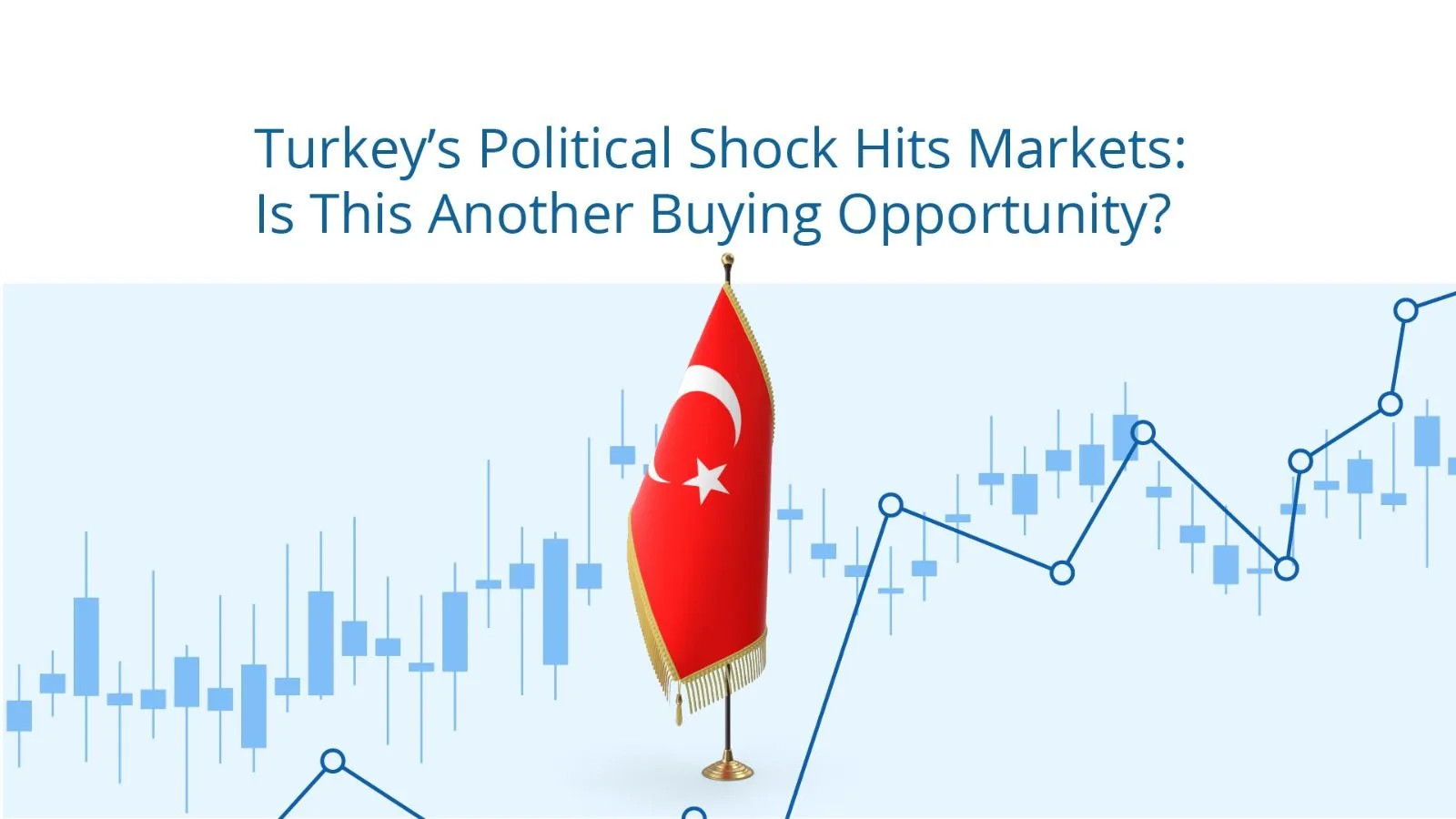
Turkey has seen political volatility before. But this time, markets reacted with unusual speed and intensity.
A Turkish court’s decision to annul the opposition CHP’s 2023 leadership congress, effectively removing party leader Ozgur Ozel and reinstating former chairman Kemal Kilicdaroglu, triggered a 6.1% selloff in the BIST 100, activated a market-wide circuit breaker, pushed sovereign risk premiums higher, and forced reported state-bank intervention to support the lira.
For GCC investors, the question is bigger than the headline itself: is this another panic-driven buying opportunity or a sign that Turkey’s resilience trade is starting to weaken?
Regional investors now have direct access to Turkish equity exposure through UAE-listed products such as the Chimera S&P Turkey Shariah ETF (TURKI), making Turkey’s political shocks increasingly relevant for Gulf portfolios.
History suggests Turkish markets have often staged sharp recoveries after politically driven selloffs. That pattern helps explain why investors are asking a familiar question again: Is this just another panic-driven entry point, or is this time different?
This time, however, markets reacted with unusual speed, suggesting investors may be reassessing whether Turkey’s familiar resilience trade still holds under a more fragile macro backdrop.
What Exactly Happened And Why Did Markets React So Violently?
Turkey’s Ankara appeals court overturned the CHP’s 2023 congress results, voiding Ozgur Ozel’s leadership and reinstating Kemal Kilicdaroglu, a dramatic move that threatens to deepen political fragmentation inside Turkey’s main opposition party.
Markets reacted immediately:
The Political Events That Led to the Market Selloff
Thursday's ruling did not emerge from a vacuum. It is the latest in a long chain of judicial actions against Turkey's main opposition that began after the CHP's sweeping 2024 municipal wins.
Tracking the sequence reveals an accelerating pattern.
The GCC investor's gateway
For GCC-based investors seeking Shariah-compliant Turkish equity exposure, the Chimera S&P Turkey Shariah ETF (TURKI) is the primary listed vehicle. Its structure, which screens out heavily leveraged financial names, provided a natural buffer against the banking sector's outsized −8% collapse on May 21. But the NAV still moved sharply, and the one-month return has turned negative.
The numbers tell a compelling longer-term story: 51% over 12 months and 122% since inception in August 2022, despite the political turbulence that has been a near-constant backdrop. That resilience reflects Turkey's underlying economic dynamism, high nominal growth, a young population, and a large domestic consumer base, factors that don't disappear with a court ruling.
Chimera S&P Turkey Shariah ETF (TURKI) Performance:
The more instructive data point may be the day-after recovery. On May 22, the TURKI NAV bounced 4.78%, echoing the pattern seen after Imamoglu's arrest in March 2025, when markets initially sold off sharply before recovering as investors concluded the macro story remained intact.
What Are the Risks That Markets Can’t Easily Price Away?
Short-term volatility is one thing. The structural risks accumulating beneath the surface are another. GCC investors should track six variables closely over the coming weeks and months.
Bottom line
Turkey has always rewarded investors who could stomach political noise and hold through the shocks. The TURKI ETF's 122% since-inception return is proof of that. But the pattern of judicial interventions is intensifying, not stabilising, and the macro cushion the central bank relied upon is materially thinner than it was twelve months ago.
The Shariah-compliant structure of TURKI provides some buffer by excluding the most exposed financial names, and the day-after bounce suggests panic sellers may have left money on the table. But the asymmetry of risks has shifted. Investors who stayed through previous shocks did so with a better-capitalised central bank behind them.