

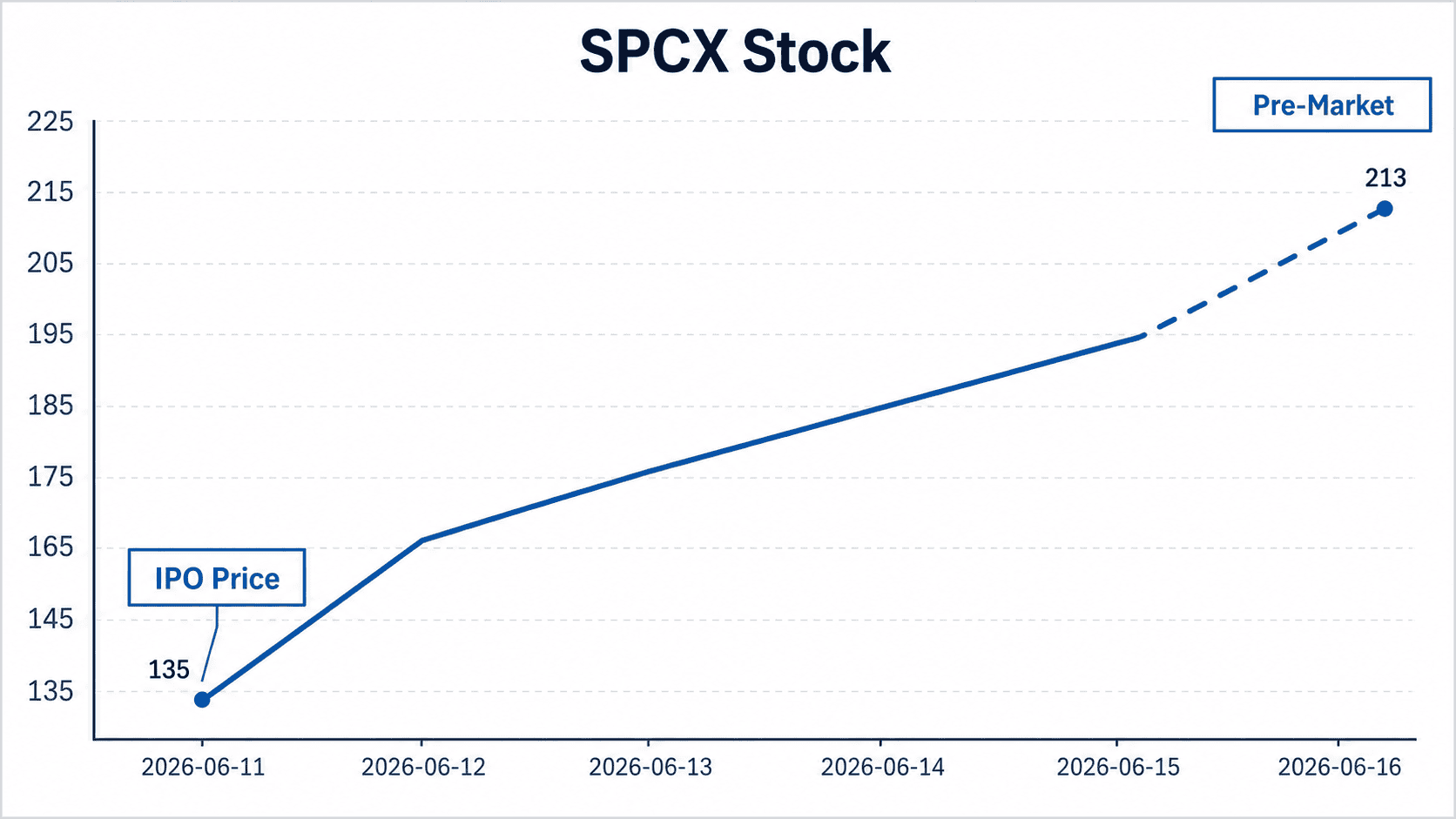
The company priced its IPO at $135 per share, raising $75 billion at a valuation of roughly $1.77 trillion, making it the largest IPO in history. The stock then surged 19% on its first trading day, closing at $160.95, before extending gains above $200 in early trading this week. That move pushed SpaceX’s market value above $2 trillion and, on paper, made Elon Musk the world’s first trillionaire.
The size of the reaction shows why SpaceX has become more than a space stock. It is now a retail trading event, an institutional allocation question, and a product-launch opportunity for ETF issuers. Our recent LinkedIn vote captured the core debate well: investors are split between viewing SpaceX as the next generational platform company and seeing the valuation as stretched after such a rapid repricing.
Now, a new layer has been added to the trade: leveraged ETFs.
The SpaceX ETF Rush Begins
A wave of leveraged single-stock ETFs tied to SpaceX launched or came to market immediately after the IPO, giving traders ways to amplify both bullish and bearish views on the stock. These products are designed primarily for short-term trading, not long-term ownership, because they seek daily leveraged returns and reset exposure every trading day.
That means a 2x long SpaceX ETF is designed to deliver roughly twice the daily move of SPCX before fees and expenses. If SpaceX rises 5% in a day, the fund targets roughly 10%. If SpaceX falls 5%, the fund targets roughly a 10% loss. In volatile markets, compounding and daily resets can cause performance to diverge meaningfully from simply holding two times the stock over longer periods.
The speed of the ETF launches highlights how quickly Wall Street is productizing investor demand around major IPOs. In previous cycles, investors waited months or years before getting access to derivatives and structured products around newly public companies. With SpaceX, the ETF ecosystem moved almost instantly.
This is partly because SpaceX sits at the center of several powerful themes: rockets, satellite internet, defense infrastructure, AI data centers, government contracts, and global connectivity. But it is also because retail and institutional demand for tactical exposure is enormous.
Options are expected to begin trading on SPCX on June 16, adding another volatility layer to the stock through derivatives. Once options begin trading, dealers will start building hedging books around a company already valued above $2 trillion with limited public float. That could make price discovery even more sensitive to momentum, implied volatility, and short-term flows.
From IPO to Trading Ecosystem
Leveraged SpaceX ETFs give traders a new way to express high-conviction views on one of the most important IPOs ever. But they also increase the risk profile dramatically.
For short-term traders, these products may become powerful tools. For long-term investors, they require caution. SpaceX may be a generational company, but leveraged ETFs are not designed to be held like ordinary equity ETFs.
The SpaceX IPO has already created one of the biggest wealth events in market history. The launch of leveraged ETFs shows the second phase of the story is now beginning: turning SpaceX from a stock into an entire trading ecosystem.